

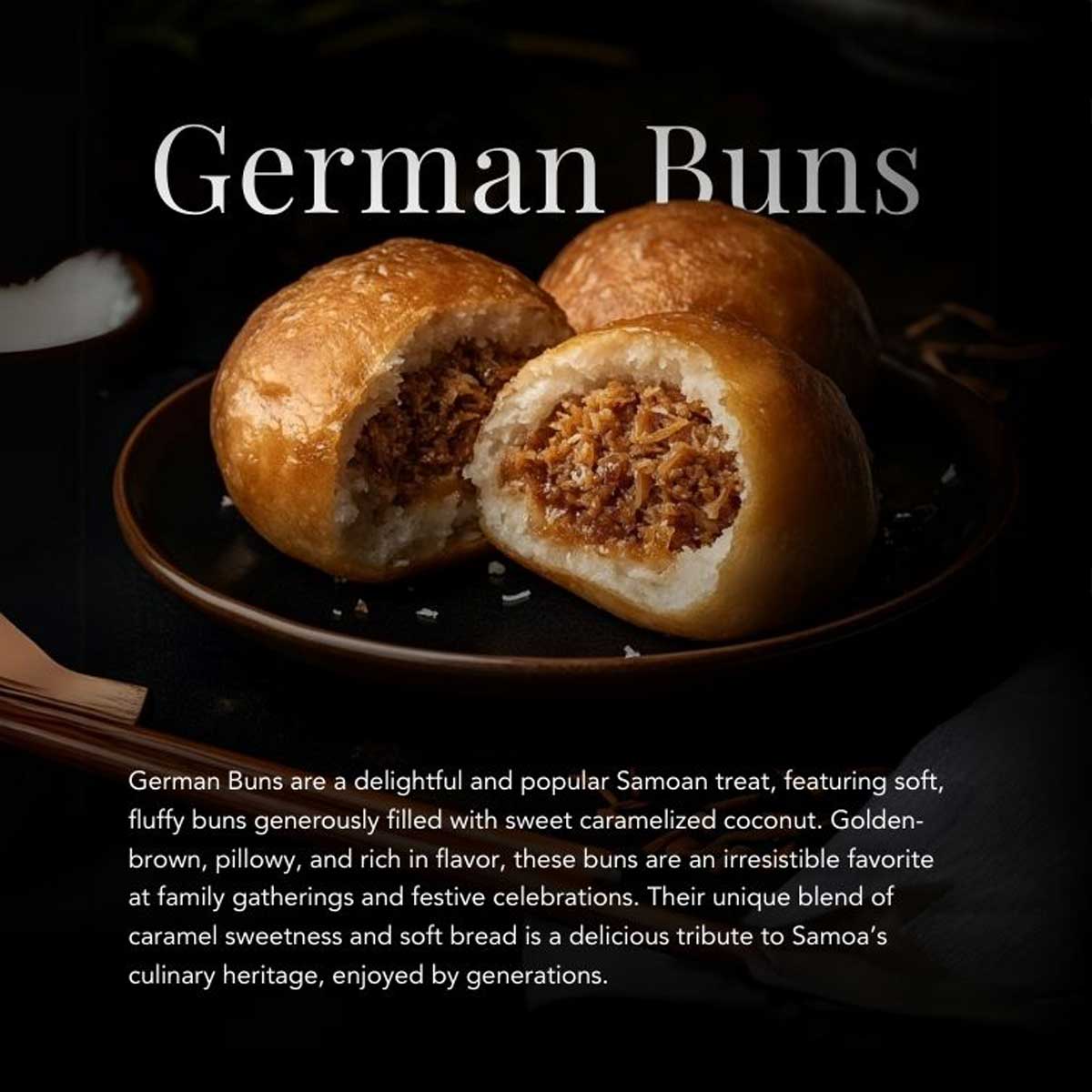
TL;DR: Samoan German buns are soft, lightly sweet bread rolls that became part of Samoan baking culture during the German colonial period (1900-1914). They are a staple of Sunday umu feasts and community gatherings. This recipe produces fluffy, golden buns that are best eaten warm with butter, palusami, or alongside a plate of sapasui.
Introduction
Some foods become cultural whether they planned to or not. German buns arrived in Samoa during the colonial era and never left. A century later, they are as Samoan as umu and sapasui. You will find them at church fundraisers, 21st birthday celebrations, funeral receptions, and Sunday family tables across Samoa, New Zealand, Australia, and anywhere the diaspora has settled.
This is a recipe for people who want to make them at home. It is not complicated. The ingredients are simple. The technique takes a little patience. The result is a bun that smells like Sunday and tastes like belonging.
What Are Samoan German Buns?
German buns are soft, slightly enriched bread rolls. They are similar to a slightly sweetened dinner roll or a light brioche, but with a texture that is distinctly their own: a soft, cottony interior and a lightly golden crust that does not harden. They are typically round, about the size of a large fist, and baked close together in a tray so they pull apart along soft sides.
The "German" in the name refers to the German colonial period in Samoa from 1900 to 1914. German administrators, settlers, and missionaries introduced European baking techniques to the islands, and the bread roll style that became most popular was adapted over generations into what Samoans now call German buns. The name stuck even as the buns became completely Samoan.
Cultural Significance
In Samoa, bread is not just food. It is a component of the elaborate food culture that surrounds family gatherings, church events, and ceremonial occasions. German buns appear alongside palusami, sapasui, chop suey, and corned beef at virtually every significant Samoan occasion.
Making buns for a gathering is a gesture of care and generosity, core values of Fa'a Samoa. A woman or family known for good buns carries a particular kind of social status. Recipes are passed down through families with the same seriousness as other cultural knowledge.
For diaspora Samoans, the smell of German buns baking is one of the most powerful sensory memories of home. Many diaspora community members report that the smell alone can trigger vivid memories of church halls in Auckland, family homes in Sydney, or village feasts in Samoa.
Ingredients
- 4 cups plain flour, plus extra for kneading
- 2 teaspoons instant yeast (or 7g sachet)
- 3 tablespoons white sugar
- 1 teaspoon salt
- 1 cup warm milk (not hot — around 40°C)
- 2 tablespoons unsalted butter, softened
- 2 eggs, lightly beaten
- 1/4 cup warm water
- 1 tablespoon neutral oil for greasing
Makes approximately 12-15 buns
Method
Step 1: Activate the Yeast
Combine the warm water, one teaspoon of sugar, and the yeast in a small bowl. Stir to combine and leave for 5-10 minutes until the mixture is foamy. If it does not foam, your yeast may be inactive. Start again with fresh yeast.
Step 2: Make the Dough
In a large bowl, combine flour, remaining sugar, and salt. Make a well in the centre. Pour in the yeast mixture, warm milk, softened butter, and beaten eggs. Mix with a wooden spoon until a shaggy dough forms, then turn out onto a lightly floured surface.
Step 3: Knead
Knead the dough for 8-10 minutes until it is smooth, elastic, and slightly tacky but not sticky. If it is too sticky, add flour a tablespoon at a time. The dough is ready when you can stretch a small piece and see light through it (the "windowpane test") without it tearing.
Step 4: First Rise
Shape the dough into a ball and place it in a lightly oiled bowl. Cover with a clean damp tea towel or plastic wrap. Leave in a warm place for 1 to 1.5 hours, or until doubled in size. On a warm Samoan day, this goes quickly. In a cold kitchen, it takes longer.
Step 5: Shape
Punch the dough down gently to release the gas. Divide it into 12-15 equal portions (weigh them if you want uniform buns — about 80-90g each). Shape each portion into a smooth ball by tucking the edges under and rolling on a flat surface. Arrange the balls in a greased baking tray, touching each other so they rise into each other and pull apart with soft sides when baked.
Step 6: Second Rise
Cover the tray with a damp tea towel and leave for 30-45 minutes until the buns have puffed and are touching each other. Meanwhile, preheat your oven to 180°C (160°C fan-forced).
Step 7: Bake
Bake for 18-22 minutes until golden on top. The internal temperature should reach about 90°C if you have a probe thermometer. Remove from the oven and brush immediately with a little melted butter for a soft, shiny top.
Serving Suggestions
German buns are best eaten warm, torn apart along the natural seams where they baked together. Serve with:
- Softened butter
- Palusami (taro leaves in coconut cream)
- Alongside sapasui (glass noodle stir fry)
- With corned beef and onion
- Simply on their own at morning tea
Leftover buns can be stored in an airtight container for 2 days or frozen for up to a month. Reheat in a 150°C oven for 8-10 minutes or briefly in the microwave wrapped in a damp paper towel.
Tips for Perfect Buns
- Do not skip the second rise. This is where the buns develop their soft, fluffy texture.
- Warm milk, not hot. Too-hot liquid kills the yeast. Aim for the temperature of a warm bath.
- Bake close together. The touching sides stay soft and are part of what makes these buns distinctive.
- Brush with butter immediately out of the oven, while still hot. This keeps the crust soft and adds flavour.
At The Koko Samoa, we celebrate the full breadth of Samoan culture, including the food traditions that carry so much memory and meaning. Explore our Samoan-inspired clothing or browse our full recipe and culture blog.
Conclusion
German buns are one of those quiet Samoan traditions that do enormous cultural work without any fuss. They feed people. They smell like home. They show up at every gathering where Samoans come together. Making them yourself is a way of continuing that tradition, wherever you are in the world.
If you are making this to give away rather than to eat, the Samoan gifts that are never the wrong size covers the keepsakes and kitchen pieces that get handed over with it.
Frequently Asked Questions
What are Samoan German buns?
German buns are soft, lightly sweet bread rolls that became part of Samoan food culture during the German colonial period (1900-1914). They are a staple at Samoan gatherings, feasts, and church events throughout Samoa, New Zealand, Australia, and diaspora communities worldwide.
Why are they called German buns in Samoa?
The name comes from the German colonial era in Samoa (1900-1914), during which German settlers and missionaries introduced European baking styles to the islands. The bread roll style that became most popular was adapted and claimed by Samoan baking culture, keeping the "German" name even as the recipe became thoroughly Samoan.
Can I make German buns without a stand mixer?
Yes. The recipe above is written for hand kneading. It takes about 8-10 minutes of steady kneading to develop the gluten. If you have a stand mixer with a dough hook, knead on medium speed for 5-6 minutes instead.
How do I know when the dough is ready?
The dough is ready when it is smooth, elastic, and slightly tacky but does not stick to your hands. You can do the windowpane test: stretch a small piece of dough between your fingers. If it stretches thin enough to see light through without tearing, the gluten is well developed.
How long do German buns stay fresh?
German buns are best on the day they are baked. They keep for 2 days in an airtight container at room temperature. For longer storage, freeze them in a sealed bag for up to one month and reheat in a 150°C oven for 8-10 minutes.


