

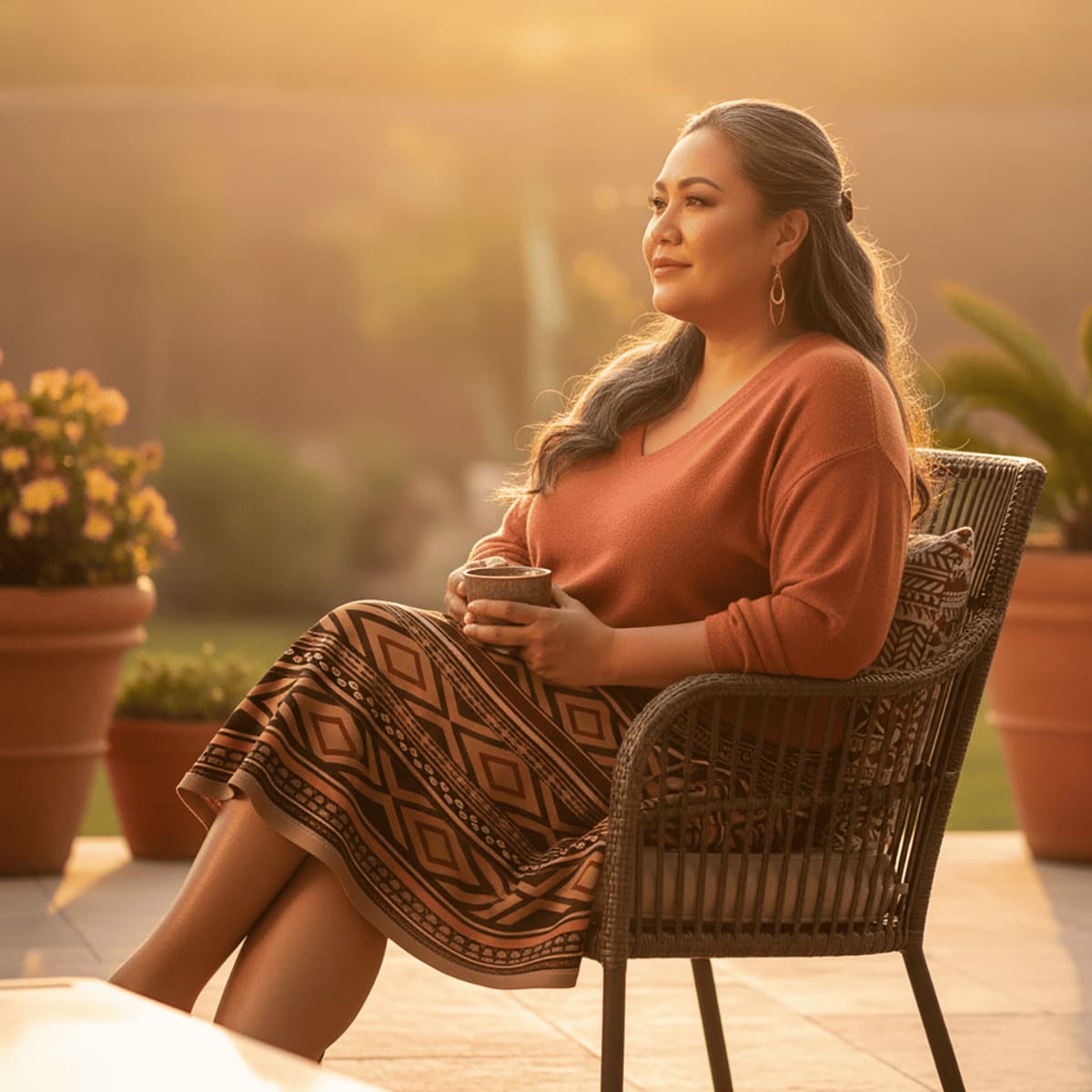
Samoan patterns are not decoration. Each one is a language. The three you see most often, elei, tatau and the warrior motifs, carry meanings about lineage, service and protection that predate written Samoan. This guide explains what each pattern says, where it traditionally appears, and what it means to wear one.
What is the elei pattern?
Elei is the printed cloth pattern of Samoa, made by pressing dye through a carved wooden board (the 'upeti) onto fabric. The motifs are drawn from the natural world: frangipani, breadfruit leaf, the shell of a turtle, the spine of a fish. Elei is the everyday pattern: worn to church, to work, to a family gathering. It signals belonging without ceremony.
Because elei sits in ordinary life rather than ritual, it is the most freely worn of the Samoan patterns. There is no restriction on who may wear it, and no ceremony required to earn it.

Elei on a necktie. The pattern that reads as heritage in a room full of plain suits. One size, ships worldwide.
Shop it →
The elei motif on a tough case. Everyday carry, everyday pattern, which is exactly what elei is for.
Shop it →What do the warrior patterns mean?
The warrior motifs draw on the geometry of the pe'a, the male tatau, and on the spear-point and shark-tooth shapes that run through Pacific design. Repeated triangles reference teeth and, by extension, protection. Long parallel bands reference the ocean and the journeys taken across it. Together they speak to service: the obligation to protect the aiga and the village.
These are the patterns people reach for when they want the object to say something firmer than “I am Samoan”. They say I know what I owe my family.

Warrior print on a necktie. Worn to weddings, funerals and job interviews by men who want the room to know where they are from.
Shop it →
Warrior geometry, drop-tested. The pattern that means protection, on the thing you protect most.
Shop it →What does the ula fala pattern represent?
The ula fala is the red pandanus-key necklace worn by orators and matai on formal occasions. It is not a pattern in the printed sense. It is an object, and one that carries authority. The seeds are cut, dried and strung by hand, and the finished ula is worn when someone stands to speak for their family.
Rendered as a print, ula fala reads as a claim to voice: the right to stand and be heard. It has become the most recognisable Samoan motif in the diaspora precisely because so many people are trying to hold onto exactly that.

The ula fala print on a soft unisex tee. The design most people point at and say “where did you get that?”
Shop it →Which Samoan patterns can anyone wear?
Elei, ula fala prints and warrior motifs on clothing are open. They are cultural design, made to be worn and shared. The distinction that matters is between wearing a pattern and receiving a tatau. The pe'a and the malu are tattooed onto the body through a ceremony, carry obligations to the family, and are earned. A printed motif is not the same thing and does not pretend to be.
If you are Samoan, wearing these patterns is continuity. If you are not, wearing them respectfully, bought from a Samoan-owned brand rather than a fast-fashion copy, is support, not appropriation. What matters is where the money goes and whether the meaning is understood.
Where do the patterns come from?
Siapo (bark cloth) is the oldest surface. Beaten from the inner bark of the paper mulberry and painted with natural dyes, siapo carried the first versions of nearly every motif still in use. Elei printing came later as a way of putting those same designs onto woven cloth. Tatau is older than both and is the only one worn in the skin.
Three surfaces, one visual language, which is why a pattern on a necktie and a pattern on a grandmother's siapo can look so alike.
What the Samoan prints actually mean carries those same prints onto the products they sit on, and explains which one to buy first.
Common questions
What is the difference between elei and siapo?
Siapo is the bark cloth itself, painted by hand. Elei is a printing method that presses those motifs onto woven fabric using a carved board. Same design language, different surface and technique.
Can non-Samoans wear Samoan patterns?
Printed patterns on clothing, yes, particularly when bought from Samoan-owned makers. Tatau (pe'a and malu) is different: it is earned through ceremony and carries family obligation.
What does ula fala mean?
It is the red pandanus-key necklace worn by matai and orators on formal occasions. It signals the authority to speak for one's family.
Are Samoan and Polynesian patterns the same?
They share ancestry through Lapita pottery designs, but each nation's motifs are distinct. Samoan, Tongan, Māori and Hawaiian patterns are related the way languages in a family are related. Not interchangeable.


